
How to Eat Like a Local in Scotland: Beyond Haggis and Deep-Fried Mars Bars
Forget the clichés, Scotland's real food story is langoustines at dawn, Stornoway black pudding, and Cullen Skink on a cold Moray coast. Here's how to eat like a local.
FOOD & DRINKRESTAURANTSSEAFOODSCOTTISH FOOD
How to Eat Like a Local in Scotland: Beyond Haggis and Deep-Fried Mars Bars
Scotland sits on top of one of the great natural larders of Europe. The clichés have had their moment. Here's what's actually on the table.
DATE - 1 JUNE 2026
10 MIN READ
FOOD & DRINK
•
•
◆ FOOD & DRINK
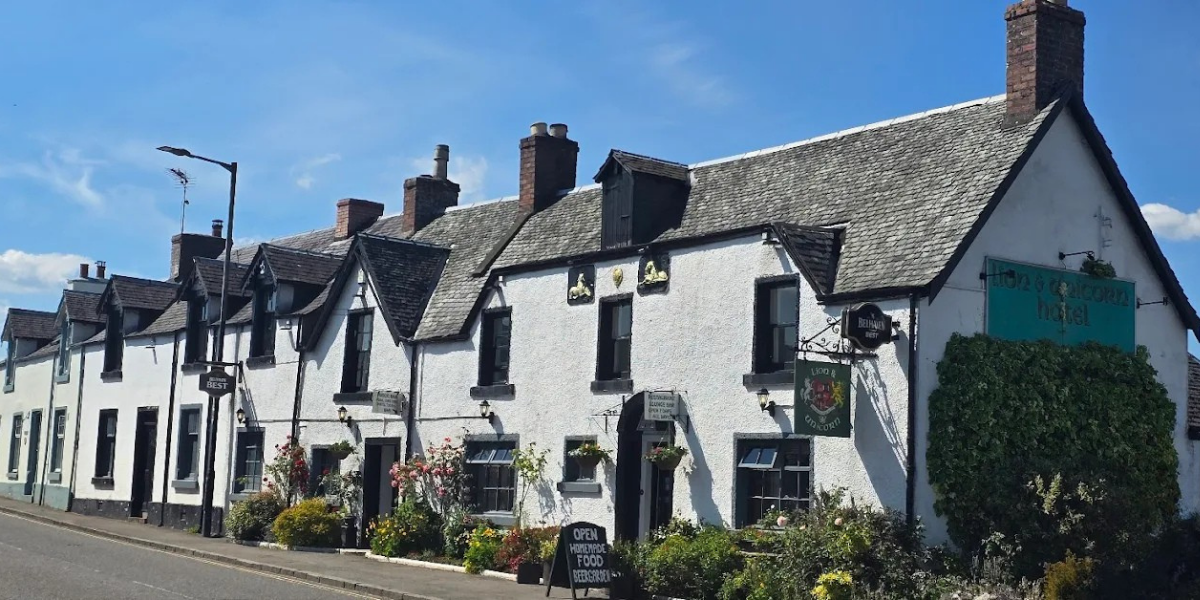
The lion & Unicorn hotel — The perfect place for good scottish fayre
Ask most people what they know about Scottish food, and you'll get the same three answers: haggis, deep-fried Mars bars, and porridge.
Two of these are genuinely worth eating. One is largely a tourist myth; most Scots have never deep-fried a Mars bar in their lives and regard the whole thing with a mixture of mild embarrassment and weary resignation. The chip shop in Stonehaven that invented it in the 1990s has a lot to answer for.
The real story of Scottish food is dramatically more interesting. And dramatically, gloriously better.
Scotland sits on top of one of the great natural larders of Europe. The cold, clean waters off the west coast produce shellfish of a quality that would stop any serious food lover in their tracks. The Highlands and islands yield beef, lamb, game, and dairy that supply Michelin-starred restaurants across the UK and Europe. Perthshire grows some of the finest soft fruit in the world. And Scotland's cities have developed food scenes that rank among the most exciting in Britain.
"The clichés have had their moment. Here's what's actually on the table."
First, Understand the Larder
Before we talk about dishes and restaurants, it's worth understanding why Scottish food is so extraordinary when it's done right. The answer is almost entirely about raw ingredients, and Scotland's are exceptional in a way that takes most visitors completely by surprise.
Scotland's coastline runs to over 18,000 miles, longer than the entire coastline of France. The cold, nutrient-rich waters of the North Atlantic and the Minch produce shellfish of a quality that would be considered remarkable anywhere in the world. West coast langoustines. Hand-dived scallops from the Sound of Mull. Orkney crab. Hebridean mussels. Wild Atlantic salmon. Oysters from Loch Fyne. These are world-class ingredients, and when you eat them as close to the water as possible, you understand immediately why Scotland's food culture is finally getting the international attention it deserves.
On land, the story is just as strong. Orkney beef is reared on pasture enriched by sea air and ancient agricultural practices and is considered by many chefs to be the finest beef in the UK. North Ronaldsay lamb from Orkney is fed on seaweed rather than grass, producing a flavour unlike anything available on the mainland, something that sounds like a food writer's affectation until you actually taste it. In season, red deer, grouse, and pheasant from Highland estates supply restaurants across Scotland with game of exceptional quality.
THE GOLDEN RULE
🐟
Follow the fishing boats, the farm shops, and the farmers' markets. The best Scottish food is almost always the food that travelled the shortest distance to reach your plate. Everything else flows from that.
When you encounter these names on a menu, you're not eating a version of something. You're eating the thing itself, from the only place it can come from.
The Dishes Worth Seeking Out
Scotland's langoustines are so good that doing anything complicated to them is, frankly, an act of culinary vandalism. A langoustine caught that morning, split in half, grilled with a little butter and garlic, eaten looking out over a sea loch with a cold glass of white wine, this is Scottish food at its absolute peak. Find them at the Seafood Shack in Ullapool, the Green Shack on Oban pier, the Whitehouse at Lochaline, or any west coast restaurant with a fishing boat visible from the window. The fishing boat is your indicator. Trust it.
• WEST COAST STAPLE
A whole haddock, hot-smoked over hardwood in a half-barrel, producing a deeply flavoured, golden fish with moist flesh and papery skin that cracks when you break into it. Arbroath Smokies have been made in the same way, in Arbroath on the Angus coast, for centuries. Eat one warm, with your hands, as close to Arbroath as possible. This is not optional. Iain R. Spink's smokie stall in Arbroath is the benchmark. The Fisherman's Galley in the town is excellent. You'll also find them at good farmers' markets across Scotland.
Langoustines - Simply Cooked
• PROTECTED PRODUCT - ANGUS COAST
Arbroath Smokie
• PROTECTED PRODUCT - ISLE OF LEWIS
Stornoway Black Pudding
Forget everything you think you know about black pudding. Stornoway Black Pudding is a looser, more intensely flavoured product than its mainland equivalent, heavily spiced with pepper and oatmeal in proportions that reflect centuries of island tradition. It is so different from what you'll find elsewhere that it carries legal protection as a unique regional product, and once you've had the real thing, the imitation version tastes like exactly that. Eat it fried, as part of a full Scottish breakfast, with a tattie scone alongside it.
• NORTHEAST CLASSIC - MORAY FIRTH
Cullen Skink
The best soup in Scotland. Which means, and I say this with complete conviction, arguably the best soup in Britain. A thick, creamy chowder made from smoked haddock, potatoes, and onions, from the fishing village of Cullen on the Moray Firth. It is warming and deeply savoury and slightly smoky and exactly what you want after a cold morning on the Scottish coast. The Royal Hotel in Cullen does an admirable version in the village where it was born. The Three Chimneys on the Isle of Skye does an exceptional one, much further north.
• NATIONAL DISH
Haggis
Not because it's the national dish and I'm obliged to mention it. Because a good haggis sheep's offal minced with oatmeal, onions, suet, and spices, rich and peppery and deeply, unapologetically earthy, is genuinely, properly delicious. The key words here are "done properly". A good haggis from a quality butcher, served with creamy neeps and tatties and a whisky cream sauce, is a dish worth travelling for. Macsween of Edinburgh is Scotland's finest haggis maker. Any good Scottish pub on Burns Night, the 25th of January, will have the real thing on the menu.
• DESSERT - PERTHSHIRE IN SEASON
Cranachan
Scotland's finest dessert. Whipped cream, toasted oatmeal, raspberries ideally from Perthshire, the finest in Scotland, honey, and a generous, unapologetic measure of whisky, layered or folded together and served in a glass. Sweet and boozy and crunchy and fruity and unmistakably, completely Scottish. Perthshire's soft fruit season runs from July to September, and that is when cranachan is at its best. It is also remarkably easy to make at home, if you can find the discipline not to eat all the raspberries before you start.
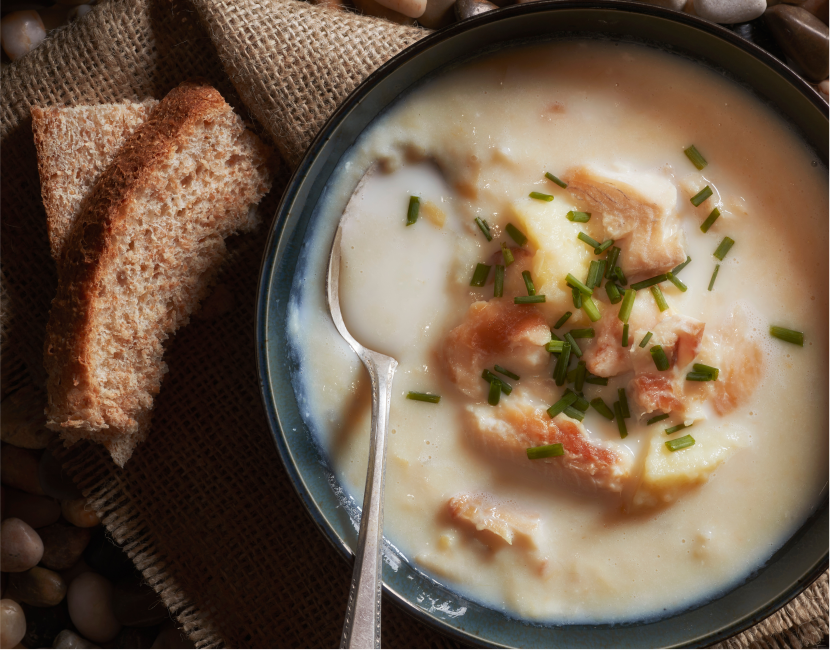
A hearty bowl of cullen skink
The Full Scottish Breakfast
This deserves its own section, not because it's glamorous, it isn't, but because it is one of the great pleasures of visiting Scotland and is almost always done better in a small B&B or guesthouse than in any hotel.
A proper full Scottish breakfast includes the following: eggs, square sausage, back bacon, black pudding, white pudding, grilled tomato, mushrooms, baked beans (the last three are optional) and crucially, non-negotiably, tattie scones. The tattie scone is a flat, potato-flour griddle cake, golden on the outside and soft within, and it is the element that separates a Scottish breakfast from an English one. If your breakfast doesn't have a tattie scone, you are eating the wrong breakfast.
The best full Scottish breakfasts are found at family-run B&Bs that source their black pudding and sausages from a local butcher. If your host can tell you the name of their butcher, you are in exactly the right place. Porridge, served with salt rather than sugar, is the traditional Scottish way. Don't dismiss it until you've tried it. It genuinely tastes better.
WHERE TO FIND THE BEST ONE
🍳
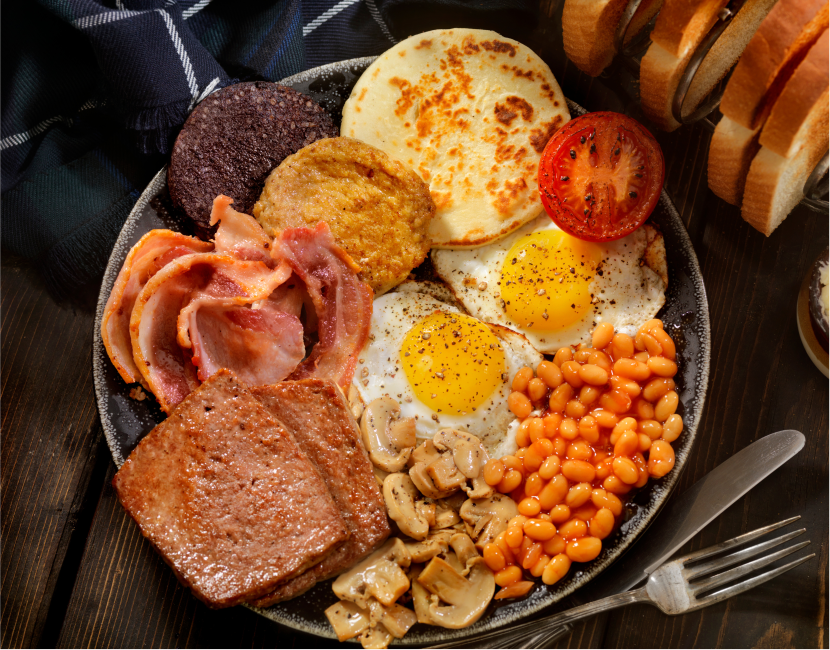
A FULL SCOTTISH BREAKFAST
Where to Actually Eat Like a Local
Scotland's best seafood is often found not in restaurants but in outdoor seafood shacks and vans, simple, unassuming operations run by people who know the local fishermen personally and whose menu depends on what came off the boats that morning.
The Green Shack on Oban's CalMac pier is a legendary example: a small hut on a busy ferry terminal, serving fresh langoustines, crab sandwiches, and scallops at prices that would make a city restaurant blush. The Seafood Shack in Ullapool is run by two local women with direct relationships with the fishing fleet. In both cases, what you're eating is as fresh as food gets, prepared by people who care deeply about it, in settings that are about as far from a restaurant with a dress code as it's possible to be.
These places offer the best food experiences Scotland has to offer. Find them. Eat outside in the sea air. Don't rush.
THE short menu rule
🍺
If the pub menu has more pages than your favourite novel, it probably can't do any of it particularly well. A pub that serves six things excellently is always, without exception, preferable to one serving forty things badly. Seek out the short menus. Trust the chalkboards.
• THE SEAFOOD SHACK
• THE FARMERS MARKET
Scotland's farmers' markets are where you meet the people behind the country's food reputation. Artisan cheesemakers. Arbroath smokie sellers who drove down from Angus at five in the morning. Venison butchers from Highland estates. Perthshire berry growers with strawberries that don't need anything done to them. Craft bakers who have been up since three.
• THE FOOD FESTIVALS
Scotland runs food and drink festivals throughout the year that offer direct access to producers and chefs in a way that no restaurant can replicate. The Spirit of Speyside Whisky Festival, each spring, celebrates one of the world's great whisky regions. The Stranraer Oyster Festival is one of the UK's largest oyster events. The Edinburgh Food Festival fills George Square in summer with street food, chef demonstrations, and produce from across the country. The Islay Festival, a week-long whisky and food celebration on Scotland's most famous whisky island, is a bucket-list food trip for anyone who takes either subject seriously.
• THE LOCAL PUB
Scotland's best pub food is found in local pubs outside the main tourist corridors, places that serve proper Scotch broth made with barley, root vegetables, and lamb; steak pies with hand-raised pastry and fish suppers using locally caught haddock rather than whatever arrived frozen on a lorry.
• THE MODERN SCOTTISH RESTAURANT
Scotland's fine dining scene has quietly become one of the most interesting in Europe, built on the philosophy of showcasing exceptional local produce with the minimum necessary interference. The Kitchin in Edinburgh, one Michelin star, Tom Kitchin's nature-to-plate philosophy in full expression, is built entirely around the idea that Scotland's ingredients need a skilled hand and good judgement, not obscuring. The Three Chimneys on the Isle of Skye has been a destination restaurant for three decades, using Hebridean and Highland produce in a remote crofthouse setting that makes the whole experience feel genuinely singular.
The common thread in all of it: the ingredient first. Everything else in service of that.
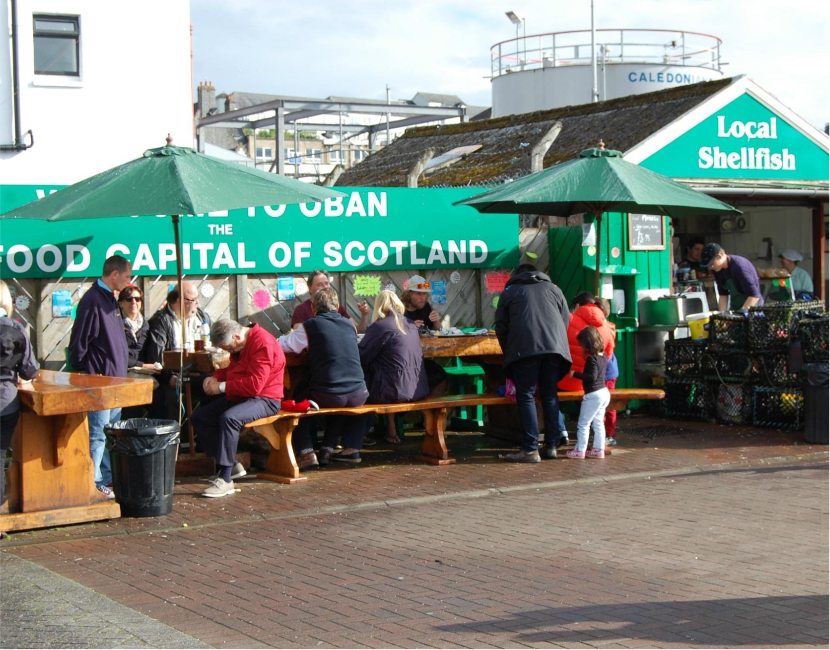
The FAMOUS "GReEN SHACK" ON OBAN PEIR
What to Eat, and Where
Scotland's food is deeply regional, and what you seek out should depend on where you are. This is not a country with a uniform national cuisine. It is a collection of places, each with its own larder and its own traditions.
• THE WEST COAST & HEBRIDES
Langoustines, scallops, mussels, oysters, lobster, and crab are eaten at the source wherever possible.
The Loch Fyne Oyster Bar at Cairndow has been supplying Michelin-starred restaurants and London's finest fishmongers since the 1970s. Eating there, at the head of the loch where the oysters are grown, is one of those experiences that recalibrates your understanding of what fresh seafood actually means.
Scotland's Seafood Heartland
• THE NORTHEAST - ANGUS, ABERDEENSHIRE & MORAY
Smokies, Beef & the Whisky Coast
The home of Arbroath Smokies, Angus beef, and the small-boat fishing fleet that supplies so much of Scotland's finest fish.
Cullen Skink originated on this coast. Aberdeen Angus cattle are raised across the region, producing some of the most beautifully marbled beef in the world. The Speyside distillery region begins here, making the northeast a genuinely rewarding destination for anyone who takes both food and whisky seriously.
• ORKNEY & SHETLAND
A Category of Their Own
Orkney beef, Orkney crab, North Ronaldsay seaweed-fed lamb, Orkney Scottish Island Cheddar, craft beers brewed with island water, self-catering on Orkney and cooking nothing but local produce is, by general consensus among those who have done it, one of the finest food holidays available anywhere in the UK.
• PERTHSHIRE & CENTRAL SCOTLAND
Scotland's Soft Fruit Capital
• EDINBURGH & GLASGOW
The City Scenes
Strawberries, raspberries, and tayberries of exceptional quality, grown in the fertile valley around Blairgowrie, available from farm shops and roadside stalls throughout July, August, and September. Buy them warm from a roadside stall, eat them in the car, and make a mental note to come back next summer. Also excellent for game-in-season pheasant, partridge, wild duck, and red deer.
Edinburgh excels at elevated Scottish cuisine, Michelin-starred restaurants built on the country's finest ingredients, handled with ambition and skill.
Glasgow is more diverse, more adventurous, and generally better value: a city where you can eat Sri Lankan, Korean, exceptional Italian, and brilliant Scottish seafood all within a mile of each other, in a culinary culture driven by a food-obsessed population that expects a great deal and usually gets it.
What to Skip
The deep-fried Mars bar exists. You can find it if you want it. It is not a window into Scottish food culture. It is a novelty item from a chip shop in Stonehaven that somehow became an international shorthand for a cuisine it has nothing to do with. Eating one is like judging Italian food by the breadstick.
THE ROYAL MILE TOURIST MENU
🚫
The restaurants along Edinburgh's Royal Mile are, with very few exceptions, in the business of capturing tourist footfall rather than cooking great food. Walk away from the castle. Head towards Leith, Stockbridge, or the Southside. The city's best eating happens in its neighbourhoods, not its tourist corridors, and the gap in quality between the two is significant.
The Pizza Crunch, a slice of pizza battered and deep-fried in a chip shop, is a genuine and entirely unapologetic staple of the Scottish chip shop experience. Try it if the spirit moves you. Do not mistake it for a culinary tradition worth seeking out.
The Munchy Box is a Glasgow invention: a pizza box filled with chips, fried chicken, pakora, and various other items assembled under a single cardboard lid. It is a late-night staple after a long evening in the pub and should be experienced at least once, ideally between midnight and two in the morning, ideally in Glasgow. It is not Scottish cuisine. It is something else entirely, and it is wonderful in its own specific context.
Scotland's Larder Has Been Here All Along
The real story of Scottish food is not the story of haggis and deep-fried novelties. It's the story of langoustines pulled from a sea loch at dawn. Of haddock smoked in a half-barrel over hardwood in a fishing village on the Angus coast. Of black pudding made on a Hebridean island, to a recipe that predates industrialisation. Of cranachan eaten in a garden in August with raspberries still warm from the sun.
Scotland has been sitting on one of the great larders of Europe for centuries without making nearly enough noise about it. That is changing the chefs, the food writers, and most importantly, the food itself are finally getting the international recognition they have always deserved.
"Skip the tourist menu. Walk towards the fishing boats. Ask the B&B owner where they get their sausages. You will eat better for it. I promise you that."
Lesley is a born-and-bred Scot, tour guide, and amateur photographer who has been helping visitors fall hopelessly in love with this country for years, and she's not sorry about it.
Love Scotland as much as we do? Come and join the conversation on the Everything Scotland Podcast episodes out now.
📸 Follow along on Facebook & Instagram for Scottish history, landscapes, and stories from the road.
ABOUT THE AUTHOR

Lesley Kennedy
Host & Creator
© 2026 Everything Scotland
POPULAR
A podcast, blog, and travel guide for everyone who loves Scotland, its history, landscapes, food, language, culture, and people.
EXPLORE
ABOUT
Privacy Cookies